Health and Safety Policy for Business Waste Removal Abbey Wood
 Purpose and commitment: This Health and Safety Policy sets out the standards and procedures adopted by our commercial waste and rubbish removal service area to ensure safe, lawful and reliable operations. The policy applies to all business waste removal Abbey Wood activities we undertake, including collections, transport, on-site handling and disposal coordination. We are committed to protecting employees, contractors, visitors and the general public by maintaining safe systems of work and reducing health risks tied to handling waste.
Scope and definitions
This policy covers all forms of commercial rubbish collection and waste management activities in our service area, including bulky waste, recyclable materials and general office waste. For clarity, rubbish company operations encompass vehicle movements, manual handling and use of mechanical lifting aids. Hazardous wastes are subject to specialised procedures that are outlined in the hazardous materials subsection below.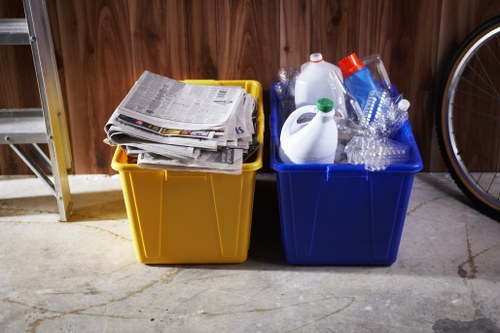
Legal compliance and best practice
The business commits to meeting applicable health and safety legislation and to following industry best practice for waste removal services. Our approach includes continuous review of statutory requirements, risk assessments, and adoption of recognised standards for commercial waste removal. We emphasise prevention of incidents through planning, training and supervision rather than reactive measures.Risk assessment and control measures: Before any job begins, a documented risk assessment must be completed, highlighting hazards such as sharps, asbestos risk, manual handling and traffic management for rubbish removal vehicles. Control measures include but are not limited to:
- Use of appropriate personal protective equipment (PPE): gloves, high-visibility clothing, safety boots and eye protection as required.
- Safe loading procedures: training on correct lifting techniques and mechanical aids for heavy items.
- Vehicle safety protocols: securing loads, daily vehicle checks and driver fatigue management.
 Staff training and competence: Personnel engaged in business waste collection and rubbish removal services receive induction training, job-specific instruction and periodic refresher courses. Training covers manual handling, safe operation of lifting equipment, spill response, segregation of recyclables and identification of potentially hazardous materials. Competence is confirmed through observation, documented checks and performance reviews to ensure every operative can carry out tasks safely within the waste removal service area.
Operational procedures and segregation: Clear procedures are in place for segregation of waste streams at the point of collection to reduce contamination, improve recycling rates and minimise exposure to risk. Drivers and operatives follow documented collection routes and protocols to avoid unnecessary handling. Where commercial sites have dedicated waste containment, these areas are kept tidy and access is controlled to prevent slips and trips.
Hazardous waste and incident management
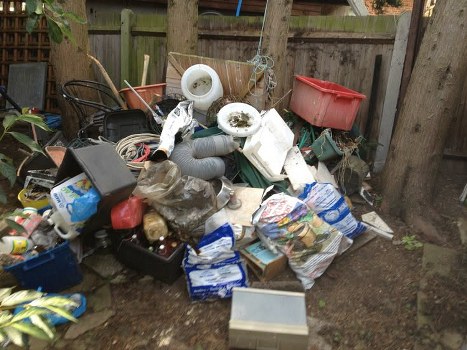
Hazardous or potentially contaminated materials discovered during collections are dealt with under a separate hazardous waste procedure. This includes secure containment, notification to management, and transfer to authorised hazardous waste carriers. In the event of injuries, spills, or vehicle incidents, operatives must follow the emergency response plan, which includes immediate first aid, securing the scene and reporting to supervisors. All incidents and near misses are recorded, investigated and used to inform risk reduction.Responsibilities and oversight: The company management retains overall responsibility for health and safety policy implementation. Supervisors are tasked with daily enforcement, monitoring, and ensuring that risk assessments and method statements are followed. Employees are responsible for working safely, reporting hazards and participating in training. Contractors and temporary staff are expected to comply with site-specific rules and the broader safety expectations of our rubbish company operations.
Monitoring, review and continual improvement: We commit to a programme of regular audits, workplace inspections and review of safety performance metrics to measure effectiveness. Findings lead to corrective actions and updates to procedures. The health and safety policy is formally reviewed at least annually or after any significant change in operation, equipment, legislation or following a major incident in the waste removal service area.
 Communication and worker engagement: Effective communication channels ensure that safety information, procedural updates and risk notices reach all team members. Regular toolbox talks, briefings before shifts and visible signage at collection points support a culture of safety. Staff are encouraged to raise concerns and suggest improvements through established reporting mechanisms.
Performance standards: The company sets measurable safety objectives, such as reducing manual handling incidents, achieving timely vehicle maintenance, and increasing safe segregation rates. Progress is tracked and reported internally. Commitment to these standards underpins the professional delivery of commercial waste services and the responsible operation of our business waste removal activities.
Summary of commitments: Our organisation will: maintain lawful and demonstrable safety practices; provide appropriate training and equipment; maintain vehicles and plant correctly; and promptly investigate incidents to prevent recurrence. These commitments support the safe delivery of rubbish removal, commercial waste collection and all related service area activities.
Approval and implementation: This policy is endorsed by senior management and implemented across the workforce. It forms a core element of operational planning and contract delivery for business waste removal services. Regular communication ensures that the policy is understood and applied at every level.
Review date: This policy will be reviewed and updated periodically to reflect operational changes and legislative developments affecting the waste management and rubbish company sector.
